Sri Lanka’s AgriConnect plan turns coordination into a delivery requirement
Sri Lanka, the World Bank Group and IFAD announced the AgriConnect Joint Implementation Plan on 30 October. It aims to connect 900,000 farmers with more competitive value chains by 2030.
Decision to consider:Before committing agricultural investment, establish which financing, storage and market-access dependencies must arrive together to make it usable.
Who should review it:Programme sponsors, agricultural investment leads and institutional delivery owners responsible for the complete farmer-to-buyer journey.
Suggested next step:Assign acceptance dates and escalation owners to the critical dependencies, then define evidence of repeat farmer use and commercial benefit. Treat the 2030 targets and funding commitments as objectives, not achieved outcomes.
Based on the announcement dated .
What happened
العربيةThe plan is backed by $550 million from the World Bank Group and $115 million from IFAD. It brings together agricultural finance, digital tools, cold chains, connectivity, irrigation and skills; implementation has begun through an existing rural-development project.
Why it matters
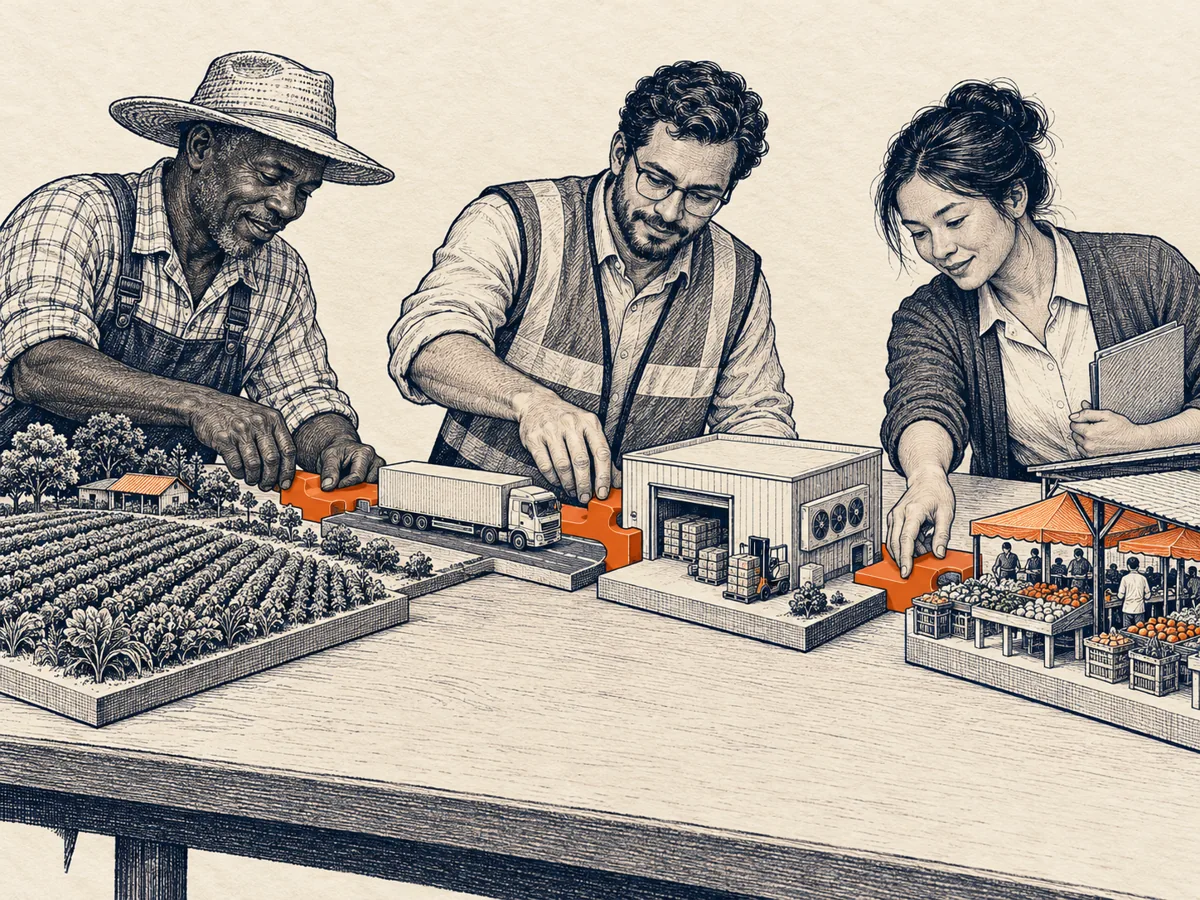
العربيةFarmers cannot use a stronger market connection if storage, transport or working capital is missing at the point of need. Parallel workstreams can each report progress while the end-to-end route to market remains unusable.
My take
العربيةThe programme needs a shared map of dependencies with accountable owners and acceptance dates. Each investment decision should ask which other capability must be ready for it to generate value. Tracking farmer participation is useful, but durable benefits require evidence of repeat use, commercial viability and reliable access to buyers. The proposed governance discipline is to escalate broken dependencies across institutions before they become completed assets waiting for another project to catch up.
My operating checks
العربية- Who owns the end-to-end outcome when finance, storage, digital services and market access sit with different institutions?
- Which dependency must be demonstrated before each major investment or regional expansion proceeds?
- What evidence of sustained farmer use and commercial benefit will distinguish delivery from enrollment alone?
The decision brief and operating questions are proposed diligence, not claims of performed work. Analysis is prepared with AI assistance and checked against the named primary sources. Editorial standards
Evidence and date verification
- www.worldbank.org
Joint plan launch, farmer target, financing, linked delivery capabilities and implementation context.
Displayed content date and Colombo dateline both say 30 October 2026, resolving the conflicting 29 October URL path.