OpenAI essay maps three ways AI could enter the org chart
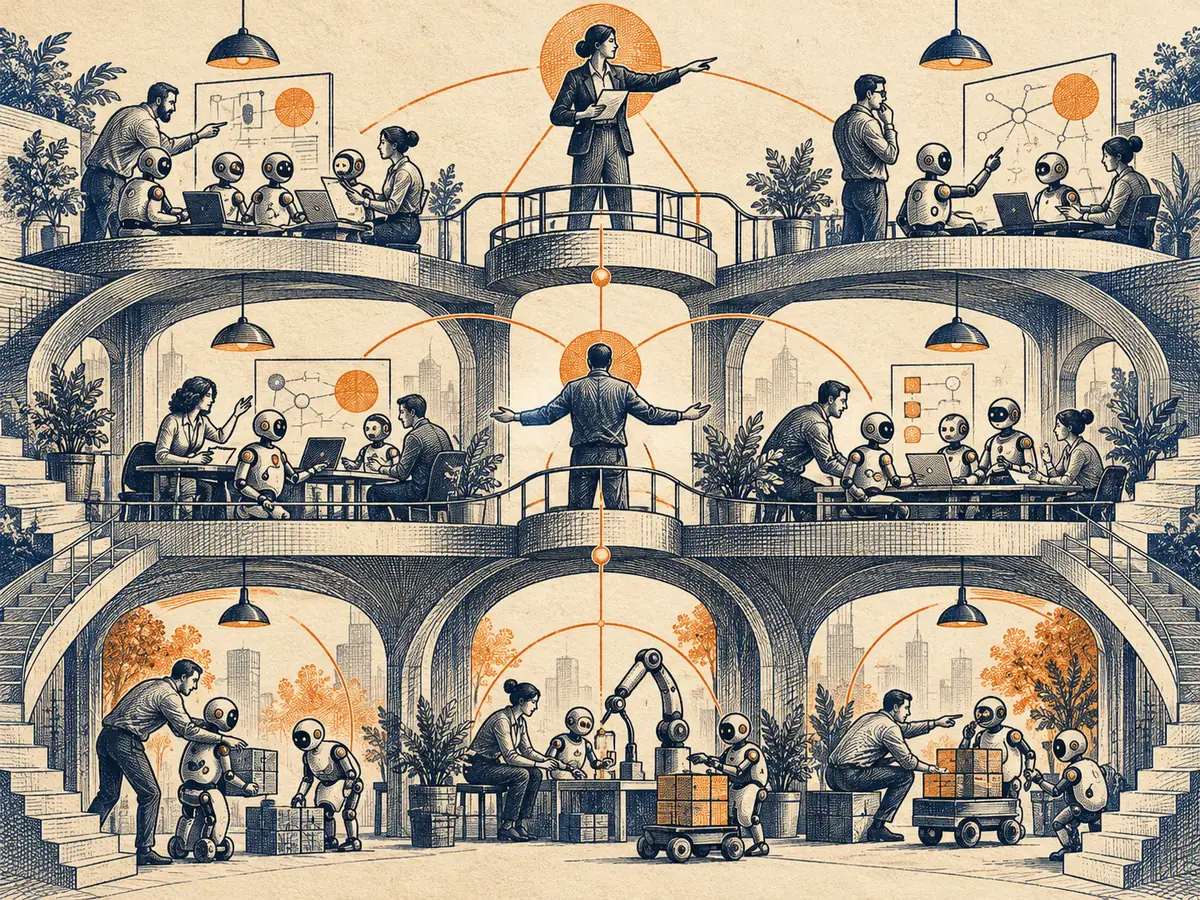
The authors describe AI working beneath employees, beside them as a colleague or between organizational layers as a coordinator.
Decision to consider:Make the intended allocation of authority explicit before placing AI beneath, beside or between employees in a workflow.
Who should review it:Business leaders, organisation-design teams and managers responsible for reviewing agent output and human overrides.
Suggested next step:Map one production process to show who directs work, accepts results and corrects assumptions. Use the essay’s scenarios as questions for local design. They are illustrative independent perspectives, not forecasts or established employment and productivity outcomes.
Based on the announcement dated .
What happened
العربيةThey argue hybrid adoption may change responsibility, red tape, worker agency, firm size and pay before end-to-end automation arrives.
Why it matters
العربيةExecutives must decide where AI sits in accountability structures, not only which tasks it performs.
My take
العربيةEvery deployment creates an implicit org chart. Making that chart explicit reveals who manages agent output, who can override it and where human expertise remains decisive.
My operating checks
العربية- Where should AI sit in the reporting line for the first production workflow?
- Which roles gain decision authority as routine execution moves to agents?
- How will managers prevent coordination agents from becoming opaque control layers?
The decision brief and operating questions are proposed diligence, not claims of performed work. Analysis is prepared with AI assistance and checked against the named primary sources. Editorial standards
Evidence and date verification
- openai.com
The announcement details, scope and availability summarized in this story.
Official source dated 2026-10-28