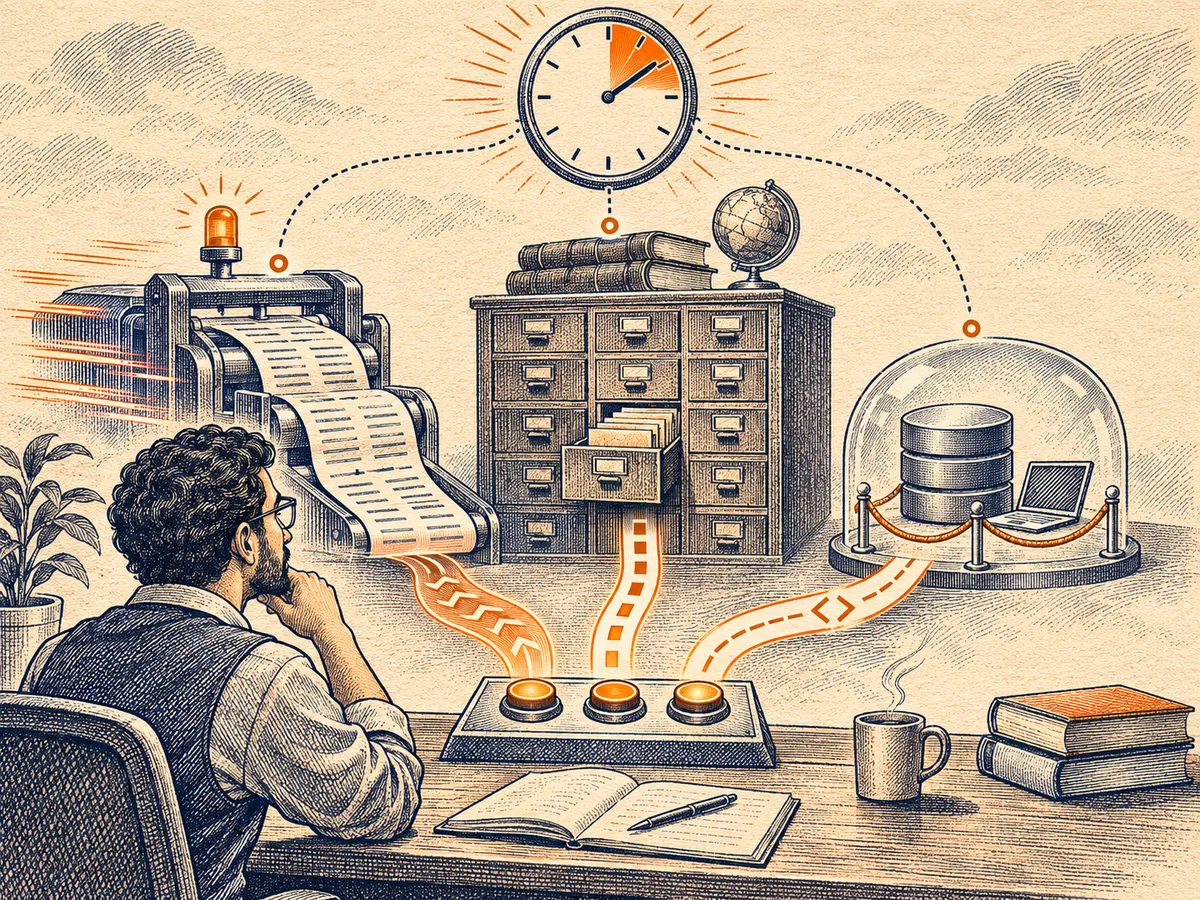
Google brings semantic definitions together, but stewards still resolve conflicts
On 29 October, Google announced generally available support for semantic models from Looker, BigQuery Graph, dbt, Snowflake, Databricks and SAP in Knowledge Catalog.
Decision to consider:Assign authority for consequential business definitions before allowing an agent to rely on a shared semantic catalog.
Who should review it:Data stewards, finance measure owners and AI product leads responsible for interpreting conflicting metrics.
Suggested next step:Start with a few measures and require answers to retain the selected definition and its provenance. Test whether disagreement remains visible and resolvable. Expanded model support was announced as generally available, while Knowledge Studio remained a preview interface.
Based on the announcement dated .

What happened
العربيةThe system brings definitions and their provenance together without moving the underlying data. Conflicting meanings remain visible for review; the Knowledge Studio interface is in preview.
Why it matters
العربيةAn AI agent can retrieve a metric quickly and still use the wrong definition. Connecting semantic models makes those differences easier to inspect, but does not decide which meaning governs a business decision.
My take
العربيةI would begin with a few consequential measures, such as revenue or active customers, and assign an owner to each definition. A shared catalog should expose disagreement before it enters an automated workflow. The useful test is whether an analyst or agent can explain which definition it used and why that definition is appropriate.
My operating checks
العربية- Who approves the authoritative definition when two teams calculate the same business measure differently?
- How will an agent retain the definition and source lineage behind an answer?
- What evidence will show that reconciliation reduces decision errors without hiding legitimate local differences?
The decision brief and operating questions are proposed diligence, not claims of performed work. Analysis is prepared with AI assistance and checked against the named primary sources. Editorial standards
Evidence and date verification
- cloud.google.com
Announcement scope, date and availability qualifications; full official primary page read.
Explicit source date 2026-10-29.