Google and NASA test robotic assistance for deep-space missions
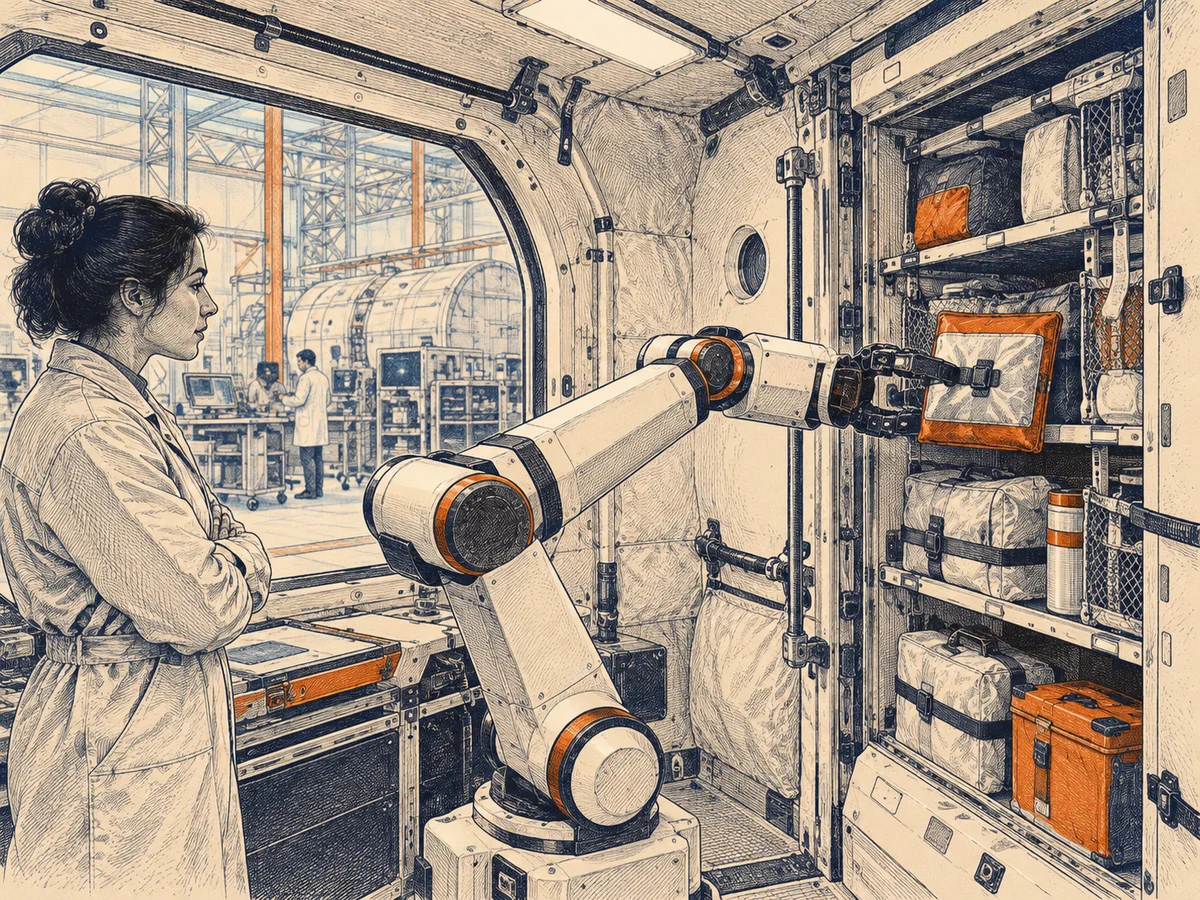
A 27 October Google Cloud report describes laboratory work with NASA on robotic assistance for deep-space missions, including retrieving a medical bag.
Decision to consider:Define the qualification evidence needed before laboratory retrieval assistance could support mission operations.
Who should review it:Robotics engineers, mission-safety reviewers and the crew medical officer should separate robot control, medical authority and recovery responsibilities.
Suggested next step:Test misplaced objects, failed retrieval and relevant environmental conditions, then review reliability before any flight consideration. Keep the reported 85% result tied to its early pick-and-place baseline, without treating the terrestrial proof of concept as a flight-ready system or clinical benefit.
Based on the announcement dated .
What happened
العربيةThe reported early baseline reached 85% success on the tested pick-and-place task. Medical decision authority remains with the crew medical officer.
Why it matters
العربيةAutonomous assistance may support remote crews, but laboratory task completion is a narrow form of evidence.
My take
العربيةI would keep medical authority, robot control and failure recovery explicit. A successful retrieval experiment is an input to qualification, not its conclusion.
My operating checks
العربية- Which actions remain exclusively under the crew medical officer's authority?
- How will the crew recover when an object is misplaced or retrieval fails?
- What environmental and reliability tests are required before flight consideration?
The decision brief and operating questions are proposed diligence, not claims of performed work. Analysis is prepared with AI assistance and checked against the named primary sources. Editorial standards
Evidence and date verification
- cloud.google.com
Lab task, reported baseline success and retained human medical authority.
Official primary page dated 2026-10-27.