AWS expands SNS push sending to four regions
Amazon SNS added push-notification sending from Hyderabad, Melbourne, Zurich and AWS GovCloud (US-East) on 12 November 2026. Supported destinations include Amazon, Apple, Baidu, Firebase and Windows push services.
Decision to consider:Editorial judgement: Authorise a one-application routing assessment, not a routine traffic move.
Who should review it:The platform owner, with mobile engineering, service operations and data-governance leads.
Suggested next step:First confirm the application's documented regional-origin requirement and map its downstream providers. Establish current-route baselines for token expiry, retries, duplicates and observed delivery; assign a named owner to each failure handoff before seeking pilot approval.
Based on the announcement dated .
Why it matters
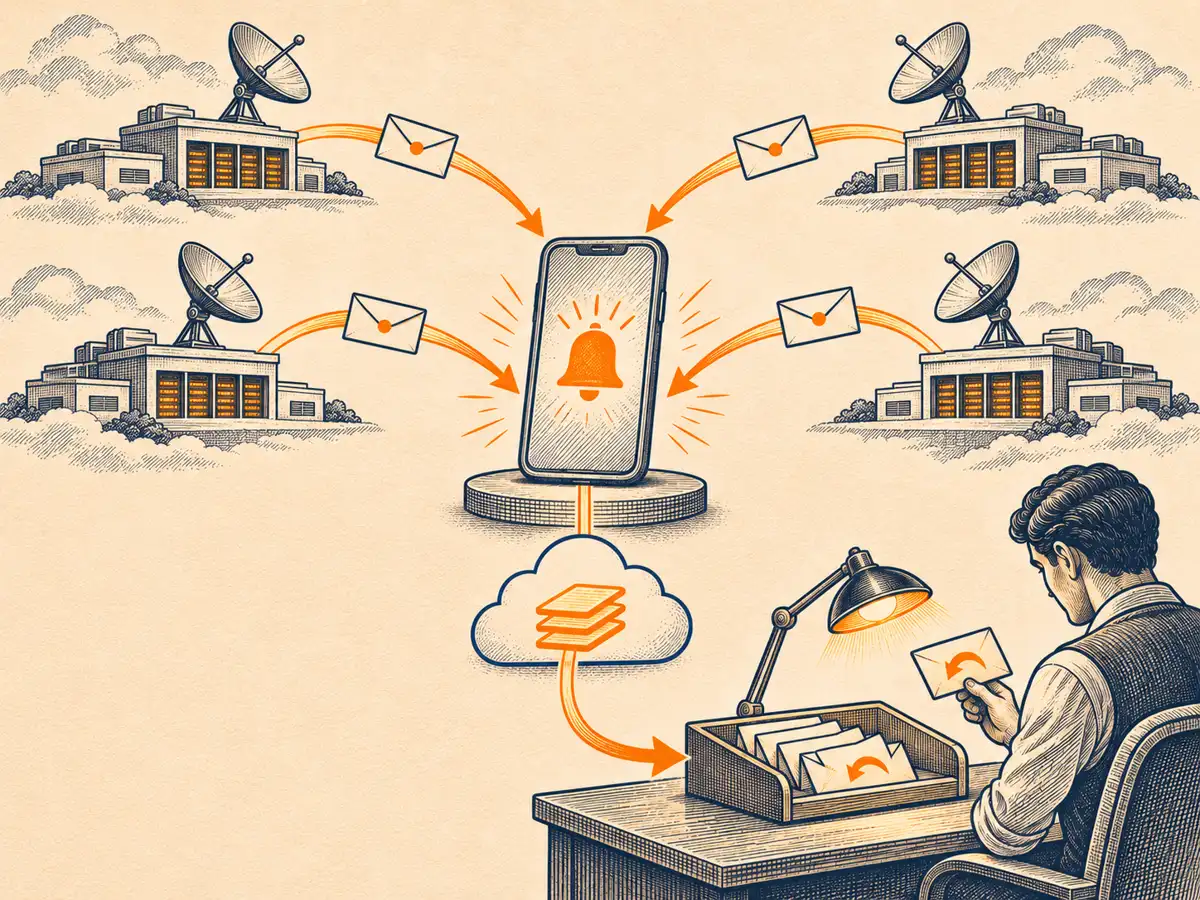
العربيةPlatform teams can align notification origins with deployments in the four newly supported regions. Mobile engineering and service operations still need to diagnose failures across SNS and downstream push providers: acceptance by SNS is not proof that an alert reached a device or a person.
My take
العربيةEditorial judgement: Prioritise failure visibility and duplicate suppression over a region-only rollout. Better regional alignment is not worth moving routine traffic if the team cannot explain rejected tokens, retries and undelivered messages; the sending region alone is also insufficient evidence for residency approval.
My operating checks
العربية- Which application has a documented need to originate notifications in a newly supported region, and what policy or deployment constraint establishes it?
- What logs distinguish SNS acceptance, rejected tokens, retries and final delivery failure, and which team owns each handoff?
- What current-route baselines and pilot results would allow a comparison of delivery outcomes, duplicate rates and latency?
The decision brief and operating questions are proposed diligence, not claims of performed work. Analysis is prepared with AI assistance and checked against the named primary sources. Editorial standards
Evidence and date verification
- aws.amazon.com
Announcement, scope and availability qualifications.
The full official release is dated 12 November 2026.